








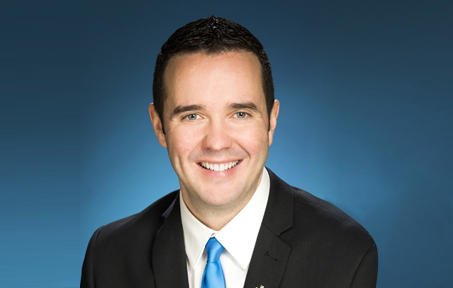
I recently joined Christopher Brown and Ian McCormack on The Political Trenches podcast, hosted by the Cross Border Network, for a wide-ranging conversation about my journey in municipal leadership from large urban centers to smaller rural communities, and the lessons I’ve carried across both environments.
One theme we discussed was the unique nature of the CAO role as a bridge. The CAO is responsible for bridging the space between council, the mayor, and staff operations, in terms of keeping roles clear, managing expectations, and ensuring that governance translates into results. It’s a role that requires flexibility, clarity, and diplomacy.
Working in a major city like Brampton meant dealing with complexity at scale: 6,000+ staff, billion-dollar budgets, deep technical expertise on staff, and constant public and media scrutiny. You spend more time with engineers, planners, lawyers, consultants, and communications staff. Every decision affects thousands, and the pace is intense. Diversity of opinion is high, and so is ambiguity. The scrutiny never lets up, but the potential for transformative impact is massive.
In a rural municipality, there’s a different dynamic. You’re closer to operations, closer to the residents, and often wearing more hats. In a place where a snowplow driver might also be the garbage collector in summer months, there are more generalists across all roles, and the relationship with council and community becomes more personal. You There’s no hiding behind bureaucracy.
A drainage issue can matter just as much as homelessness in a large city, because it affects someone directly and often immediately. Fewer layers mean decisions move faster, but resources are limited. And yet, the bylaws are the same. The principles of good governance don’t change with population size. A good CAO should be able to lead in both environments, provided they carry the right mindset.
Leadership means continuous learning. I hold an Honours BA in Political Science and Public Administration and am currently completing a Master’s in Public Administration (Local Government) at Western University. I highly recommend that any aspiring CAOs complete the new CAO Leadership Certifications from both the Ontario and Canadian Municipal Administrators’ Associations. Both are excellent programs that I have also completed, and which have not only been extremely helpful with professional development but have opened doors to new opportunities.
Having served as a CAO since 2018, I now step into the role of Chief Administrative Officer for the Township of South Stormont, Ontario. South Stormont is a growing municipality with exciting potential, particularly around economic development and waterfront enhancement. I look forward to continuing to build trust, strengthen services, and bring the skills I’ve developed in urban settings into this more community-focused context.
If you’re considering a CAO role, my first piece of advice is: get broad experience. Don’t stay locked in one portfolio. If you’ve worked in corporate services, spend time in community services, or vice versa The more departments you understand, the better you’ll lead.
Also, don’t wait for the “perfect” job. Consider Deputy CAO roles or take on leadership assignments in smaller municipalities. CAO roles often turn over every 4 to 5 years, and with many nearing retirement, the field needs more emerging leaders. If you’re motivated by service and community impact, this is a deeply rewarding path.
And finally - stay humble, listen well, and be present. In small towns, you’ll need patience. In big cities, you’ll need resilience. In both, you’ll need the ability to align local priorities with broader government policies, especially when chasing limited grant dollars. Don’t assume you can’t compete with bigger municipalities. Some of the most innovative projects I’ve been part of came from aligning with federal/provincial goals and moving fast when the opportunity came up.
The CAO role isn’t about knowing everything. It’s about knowing how to bring the right people together, how to listen, ask the right questions, and how to move a community forward, whether you’re managing 60 staff or 6,000.
If you’re considering a CAO role yourself, don’t wait - go for it! We need more people willing to step up who can lead with integrity, strategy, and heart.